An Expensive Exercise

Editorial Note

Each article in this series explores a recurring theme that emerged naturally from documented conversations with fathers while preserving the authentic voices of the men who shared their experiences. Rather than speaking for fathers, the series listens carefully to them, documents their lived experiences, and encourages thoughtful reflection that can strengthen families, institutions, and society.
There is a conversation that almost never happens.
Boys grow up hearing that providing for a family is part of what will be expected of them as men. They hear it at home, in school, from the pulpit, from relatives, and in the way society speaks about men who fail to provide.
They learn what will be expected of them.
But how often are they prepared for what carrying that responsibility will require of them?
Providing requires more than money. It can demand physical strength, patience, judgement, and emotional reserve. Sometimes those demands arrive before the capacity to manage them has been fully developed.
For many men, the real cost of responsibility is discovered only while carrying it.

In Article Two https://zabethan.org/where-fathers-keep-their-joy/, we documented something that appeared across several conversations. Ask a father what makes him proudest and his answer often leads to somebody else. He does not necessarily make himself the centre of the answer.

But when some of these fathers spoke about the weight of fatherhood, they became remarkably direct.
They spoke about what it required of them.
Not with resentment. Not asking anyone to lighten the load.

They counted.

And one father counted so precisely that his answer became the structure of this article.
The Man Who Itemised
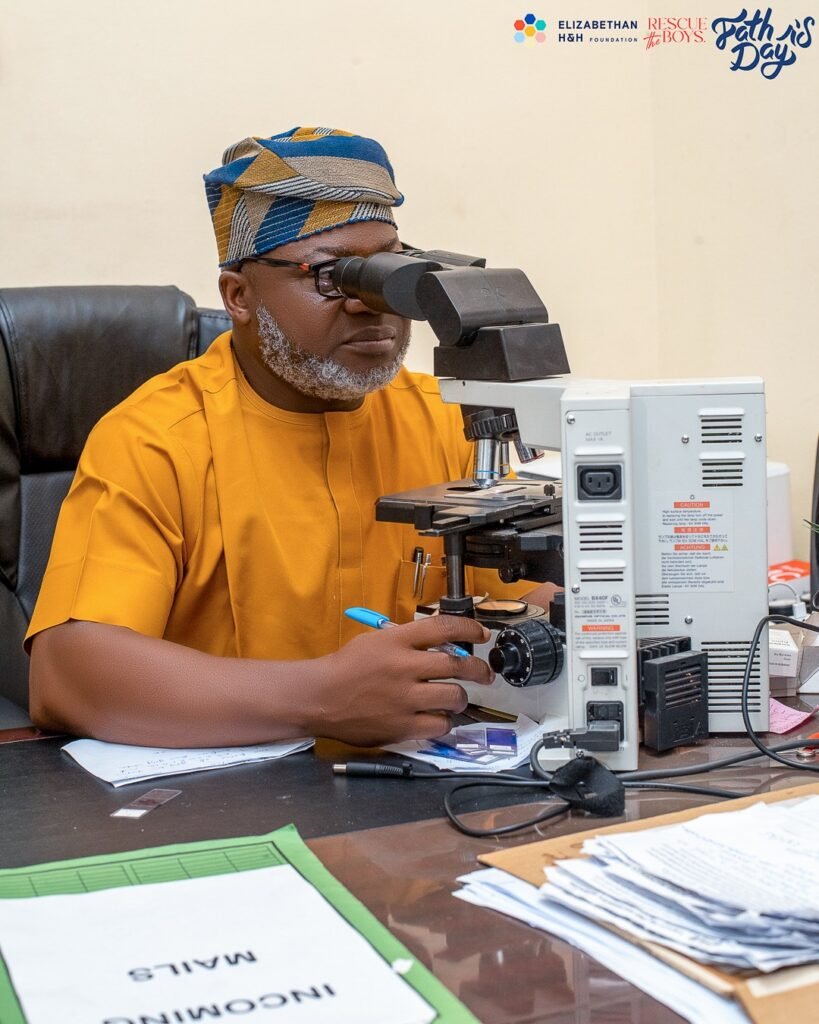
Professor Sunday Soyemi is a pathologist at the Lagos State University Teaching Hospital. Asked what fatherhood involves, he did not reach first for sentiment:

Professor Sunday Soyemi is a pathologist at the Lagos State University Teaching Hospital. Asked what fatherhood involves, he did not reach first for sentiment:

“It’s a big price to be a father. It comes with a lot of sacrifice. It’s an expensive exercise. Your health is involved, being a father. Your finance is involved, being a father. Your emotional intelligence is also involved, being a father. If you sum up this together, that’s why I said earlier that it is an expensive thing.”
Listen to what he repeats.

Being a father.

Three times. After three separate items.

He is not simply describing three pressures that happen to arrive together. He is itemising what fatherhood, in his experience, draws upon:

Health. Finance. Emotional intelligence.

Then he does something worth noticing.

If you sum up this together.

He adds them.

He arrives at a total.

And the word he chooses for that total, twice, is expensive.

Not expensive only in the financial sense. His own list makes that clear. Money is only one line.

That is what makes the answer so striking. He does not speak generally about sacrifice. He names its parts.

Three lines.

One total.

And when we returned to what the other fathers had told us, their experiences illuminated each line on his list.

Line One: Health

Professor Soyemi named health first.

Mr. Dada works as a gateman at a school. Ten years ago, while working as a welder, he sustained an injury. He has never had the surgery he says he needs because he has not been able to afford it.

His account was straightforward. What he earns goes towards keeping himself and his family comfortable. There has not been enough left for the operation.

Ten years.

Consider what that number contains.

A physical problem carried alongside the ordinary demands of earning a living. A medical need repeatedly overtaken by more immediate financial responsibilities.

What is striking is that Mr. Dada does not present himself as a martyr.

He does not ask to be admired.

He simply explains where the money goes.

For him, supporting the wellbeing of his family is part of the calculation. His own unresolved health need sits inside that reality.

That distinction matters.

This series should not romanticise a father postponing medical care. Nor should his story be used to suggest that a family is responsible for his untreated injury.

What his account allows us to see is something narrower, and more important:

When resources are limited, a father’s own needs can become one of the things repeatedly deferred.

Mr. Noah Olukayode, a social worker, encounters men carrying similar pressures through his work:

“As a social worker, I know I meet so many fathers, men, every day. A lot of them are neglected. They run from pillar to post just to give their children the best, just to give their family the best. Every responsibility falls on their table and they don’t even have time to take good care of themselves. For me, as a father, I will advise fathers to please do your check-up all the time. I lost about two friends this year, all because of hypertensive cases.”

Read the phrase run from pillar to post.

That is not the language of a report. It is the language of a man describing something he says he encounters repeatedly.

Then comes the sentence that changes the weight of his advice:

“I lost about two friends this year.”

Not anonymous men somewhere else.

People he knew.

And that personal experience sits behind the instruction he gives other fathers:

“Please do your check-up all the time.”

He is also speaking as a father himself. He is therefore not addressing men from outside the responsibilities he describes.

Put these three voices beside one another.

A pathologist names health as one of the costs of fatherhood.

A gateman describes a health need that has remained unresolved for ten years while limited resources are directed towards daily living and family responsibilities.

A social worker warns fathers not to become so consumed by responsibility that they stop attending to themselves.

The point is not that fatherhood inevitably damages a man’s health.

It is that responsibility should not make a father’s own wellbeing invisible.

Line Two: Finance

Professor Omoniyi Kayode Yemitan, a Professor of Pharmacology at the Lagos State University College of Medicine, did not merely describe financial pressure.

He measured the change in his own life:

“Fourteen years later my quality of life is half of what it was fourteen years before. So that’s the situation. Then I didn’t have kids, but now I have them. So when I didn’t have responsibilities I was far better financially than now that I have a lot of responsibility, so you will see the pressure that has put. That alone can put a lot of pressure on you.”

Half of what it was.

That is a striking way for any man to describe the financial effect of increased responsibility.

Then come four words that are easy to pass over:

“So that’s the situation.”

He places them immediately after one of the strongest statements in his account.

He does not dramatise it.

He does not ask for sympathy.

He states his experience and continues.

And that matters, because acknowledging cost is not the same thing as regretting responsibility.

Professor Yemitan does not say that his children are the problem. He does not say that fatherhood was a mistake. He describes the financial difference between a period when he had fewer responsibilities and the life he has now.

That distinction should be preserved.

A father can love his family deeply and still acknowledge that responsibility has financial consequences.

Those two truths do not cancel each other.

We make honest conversations about fatherhood harder when we allow only one side to be spoken aloud.

We celebrate the joy.

We recognise the duty.

But we should also allow a father to say:

This costs me something.

Not as accusation.

Not as regret.

Simply as truth.

Professor Yemitan also identifies what financial responsibility can produce beyond the numbers themselves:

Pressure.

He uses the word twice.

That is where Professor Soyemi’s first two lines begin to touch each other. Finance does not always remain a financial matter. The pressure created by financial responsibility can travel into other parts of a man’s life.

The bill is not necessarily divided into neat compartments.

Line Three: Emotional Reserve

The third item on Professor Soyemi’s list is the hardest to see.

A man’s health can be examined.

His finances can be calculated.

But what responsibility draws from patience, judgement, restraint, and emotional control leaves no simple record.

Mr. Sikiru Gbadebo, a newspaper trader, described the requirement this way:

“Being a father isn’t a benchmark for maturity but anyone who wants to be a father must be matured to handle the responsibilities that comes with it.”

There is an important distinction inside that sentence.

Becoming a father does not automatically make a man mature.

Fatherhood, in Mr. Gbadebo’s account, requires maturity from him.

That raises a larger question about how boys and young men are prepared for adulthood.

We often speak about future responsibility in terms of position:

You will become a husband.

You will become a father.

You will provide.

You will take responsibility.

But the position and the capacity to carry it are not the same thing.

A young man can arrive at responsibility before he has fully developed the patience, emotional regulation, judgement, or resilience that responsibility will require.

That does not make him incapable of growth.

It means preparation matters.

Mr. Oluwaseyi, a commercial motorcyclist, described one of the qualities that years of marriage and fatherhood have demanded from him:

“For those of us that are married for a while, they faced a lot but because of our children, we just need to have a lot of patience in all situations.”

Because of our children.

He acknowledges difficulty without turning that difficulty into an accusation against anyone.

That is important.

His statement does not tell us who caused the challenges, nor does it invite us to assign blame within his family. What it tells us is what he believes those challenges require from him:

A lot of patience.

And he identifies his children as part of the reason he keeps choosing it.

Put his answer beside Professor Soyemi’s and another part of the picture emerges.

One father names emotional intelligence as part of the cost.

Another father describes patience as something he repeatedly needs in order to continue carrying responsibility.

The vocabulary differs.

The underlying demand is recognisable.

If You Sum Up This Together

Six men.

One conversation about cost.

A pathologist itemised it.

A gateman described a health need deferred for ten years.

A social worker warned fathers not to neglect themselves.

A professor measured the financial difference responsibility had made in his life.

A newspaper trader separated fatherhood from automatic maturity and insisted that responsibility requires the latter.

A commercial motorcyclist named patience as part of what helps him continue through difficulty.

Different professions.

Different economic circumstances.

Different ways of speaking.

Yet their accounts meet around a central truth:

Fatherhood can ask much of the person carrying it.

None of this should be read as a complaint on behalf of fathers.

That is not what these men gave us.

Neither should sacrifice be romanticised simply because a father makes it willingly. An untreated injury does not become desirable because it was endured while providing for a family. Financial pressure does not cease to be pressure because the responsibilities behind it are loved. Emotional strain does not become irrelevant because a man chooses patience.

What these fathers offer instead is something more useful:

An honest account of responsibility.

Professor Soyemi called it an expensive exercise.

His choice of words gives us permission to ask what is included in the price.

And the other fathers help answer.

The Conversation Before Fatherhood

There is another reason these accounts matter.

Every father was once a boy.

And if adulthood will ask boys to carry responsibility for others, preparing them cannot begin only when those responsibilities arrive.

We should teach boys about provision.

But provision should not be taught as money alone.

A future father needs to know how to earn and manage resources.

He also needs to understand his health.

He needs emotional vocabulary.

He needs the capacity to ask for help.

He needs patience and conflict management.

He needs to understand that maturity is not automatically delivered with adulthood.

He also needs to know something many men discover much later:

Caring for yourself is not the opposite of caring for your family.

Sometimes it is part of it.

That is not a message designed to frighten boys away from fatherhood.

It is preparation.

There is a difference between telling a young man that responsibility is difficult and preparing him to carry responsibility well.

The first merely warns him.

The second equips him.

What This Asks of Us

Preparation is one of the most practical interventions we can offer before responsibility arrives.

But preparation alone cannot help the men who are already standing inside it.

For them, the question changes.

How do we support a father without diminishing his agency?

How do we encourage men to attend to their health before a crisis forces them to?

How do we create spaces where a man can acknowledge financial or emotional pressure without his honesty being mistaken for weakness, irresponsibility, or regret?

How do we help fathers remain whole while they continue to fulfil the responsibilities that matter to them?

These questions sit close to the work of Elizabethan H&H Foundation.

Our commitment to boys and men follows a life-course approach.

Prepare the boy before responsibility arrives.

Support the man while he carries it.

Strengthen the environments around both.

Because there is little value in teaching boys that they must one day carry responsibility if we never teach them how to carry it without disappearing beneath it.

Professor Soyemi called fatherhood “an expensive exercise.”

He was not asking anyone to reduce its value.

He was helping us see its cost.

And Mr. Olukayode gave us the simplest place to begin:

“Please do your check-up all the time.”

For a man accustomed to placing everyone else on the list, one of the most important things we can tell him is this:

Your name belongs on the list too.

About the Series

The Voices of Fathers is a Learning Hub Documentation Series by Elizabethan H&H Foundation, developed from documented conversations with fathers from diverse professions, backgrounds, and communities across Lagos State.

Each contributor participated with their consent and spoke in a personal capacity. Institutional affiliations are included solely for identification and do not represent the views of their respective organisations.

The series forms part of the Elizabethan Learning Hub, the Foundation’s official knowledge and documentation platform established to preserve lived experiences, professional observations, evidence-informed reflections, and documented learning relating to the boy-child, boys and men, and the environments that shape their development and wellbeing.

By preserving authentic voices, The Voices of Fathers contributes to a growing body of knowledge that encourages deeper understanding of fatherhood and supports healthier conversations around boys, men, families, and society.

By preserving authentic voices, The Voices of Fathers contributes to a growing body of knowledge that encourages deeper understanding of fatherhood and supports healthier conversations around boys, men, families, and society.

Author


2 thoughts on “An Expensive Exercise”

  1. This is incredibly powerful and heavy. We rarely hear fathers speak so candidly about the toll of providing. Professor Soyemi’s breakdown of health, finance, and emotional intelligence hits home perfectly, especially the reality of men deferring their own medical needs to keep their families afloat. A deeply necessary read.

Leave a Reply

Your email address will not be published. Required fields are marked *

Sign up to receive resources for mental wellness, emotional strength, and personal growth.

General Newsletter Subscription Form
  • Home
  • About Us
  • Get Involved
  • Learning Hub
  • Media
  • Contact Us