Where Fathers Keep Their Joy

Where Fathers Keep Their Joy

Editorial Note

Each article in this series explores a recurring theme that emerged naturally from documented conversations with fathers while preserving the authentic voices of the men who shared their experiences. Rather than speaking for fathers, the series listens carefully to them, documents their lived experiences, and encourages thoughtful reflection that can strengthen families, institutions, and society.

Three men sat for these conversations who will almost certainly never meet.

One directs pharmaceutical services. One chairs a senior staff association. One runs a lotto stand. Between them sit the distances a society knows how to make: education, income, standing, the kind of room each man is invited into.

They were asked what makes them proudest.

They answered differently. But beneath their words was the same answer.

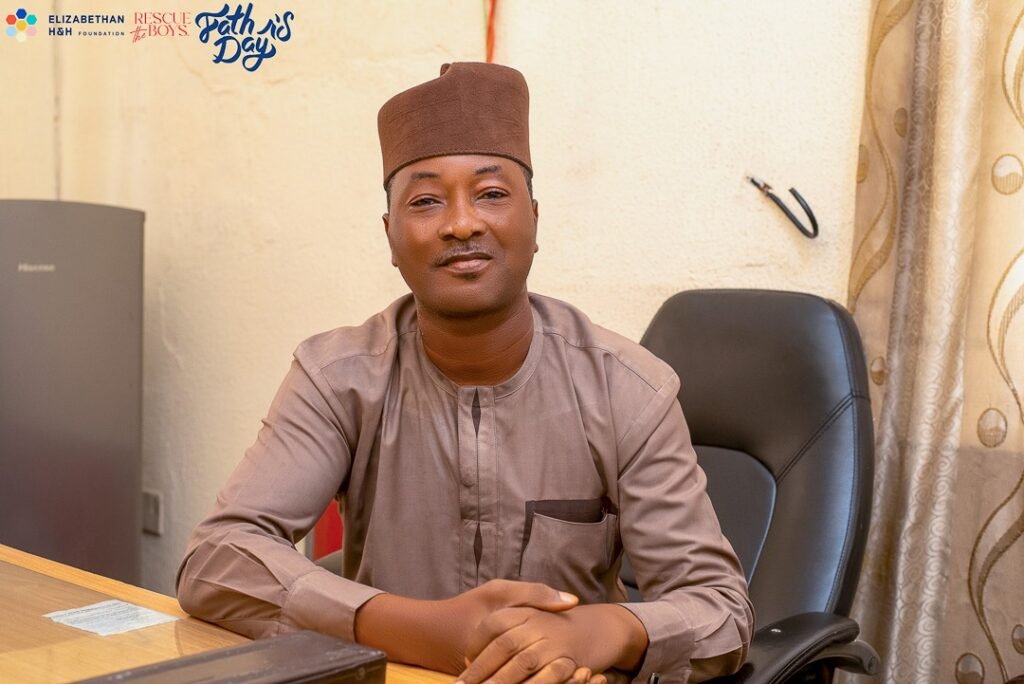
The Director

Dr. Oyetunde Ajayi, Director of Pharmaceutical Services:

“One of the proudest moment is seeing your offspring make great success and watching them grow. I had a child one time that she was just like three KG from birth and some were even less than that and you watch them grow from tiny little creature to big people. It’s a source of joy.”

He remembers a birth weight.

Not a promotion. Not a title. Not a career milestone. Three kilogrammes, and a child who was smaller than most.

Tiny little creature to big people. That is not the language of a hospital. It is the language of a man still surprised by something he has watched happen with his own eyes.

He is the Director of Pharmaceutical Services. Yet the measurement he returns to is the one that never stopped astonishing him.

Three Different Worlds

One father speaks from a hospital. One from a staff association. One from a roadside stand.

Different worlds. About as different as one city can make them.

The same emotional language.

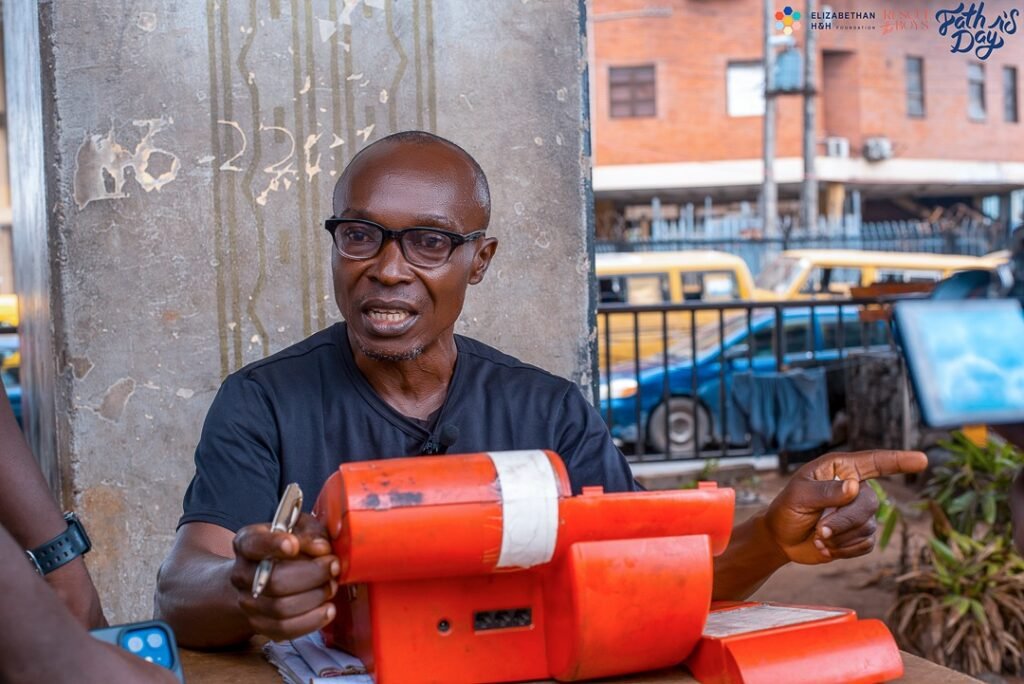
The Sub-Agent

Mr. David Obinna Okezie, a lotto sub-agent:

“Like as I am here now I am here because I love my family. I am here myself so that they will be comforted and their comfort is what I derive joy from. I mean, we have struggled.”

Consider where he is standing when he says it. At his post. Working.

We have struggled.

He does not dress it up. He does not ask for sympathy either. He says it as though he is stating an ordinary fact, then returns to what matters most to him.

Their comfort is what I derive joy from.

Not the work. Not what the work has bought him. The comfort it brings to the people he loves.

The Chairman

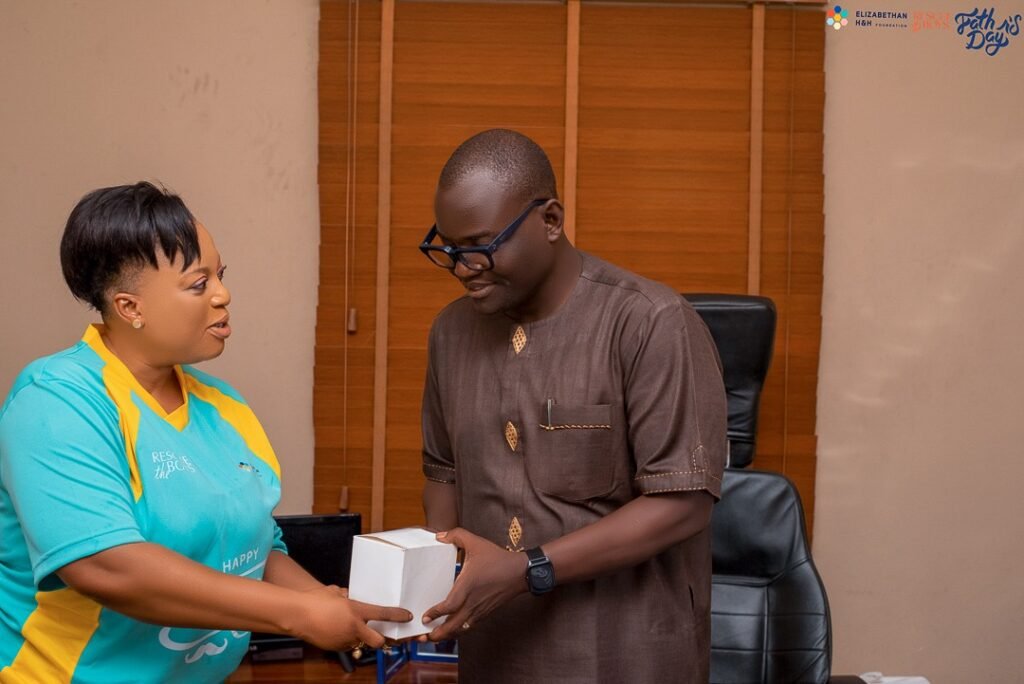
Comrade Omoniyi Olalekan, Chairman of the Senior Staff Association, Federal Neuropsychiatric Hospital, Yaba, Lagos, told a longer story. It begins with a request he could not meet.

“My son told me about getting a new phone. It was around four hundred and fifty thousand and I don’t have such money.”

Most accounts of fatherhood would stop there, with the shortfall. His does not.

“I felt okay, I’m going to make it a surprise for him.”

He found another way. He financed the phone through instalments, having just told his son he did not have the money.

Then he carefully planned the surprise so that his son would not see it coming, sending the parcel to the car park and telling the household it was a cap that needed taking to his tailor.

The errand came at an inconvenient time. His son had somewhere else to be, and the family did not yet understand why collecting the parcel seemed so important. Comrade Olalekan chose not to explain, because explaining would have ended the surprise.

So the father who had taken the phone on instalments spent that morning listening to everyone explain why the errand was inconvenient.

“They got there, they now found out it was a phone, not a cap. Later my son said, ‘Daddy, I’m very sorry.'”

Consider what the whole episode required of him. A financial commitment he had chosen to take on, for a sum he had just said he did not have. A surprise he had to plan and sustain alone. And a morning spent making a request nobody fully understood, because the explanation was the one thing he could not give them yet.

He tells it as one of the good days.

The Same Answer

Not one of them located his joy in money, promotion, possessions, or title. Two of them hold titles worth naming, yet neither title became the centre of the story. Not one mentioned being thanked. Not one described a moment in which he was the subject rather than the witness.

What these conversations reveal is a dimension of fatherhood that can easily go unspoken: the deep personal fulfilment many fathers find in the growth, comfort, and happiness of those they love. Ask a father what makes him proudest, and he answers by describing another person.

The rule introduced in Article One taught a boy to keep his feeling out of sight so that he could encourage others. Here is that same orientation years later, in men concealing nothing at all. They are simply pointed outward.

That is why the distance between these three men matters so little. A director, a staff association chairman, and a sub-agent, separated by profession, income, and standing, and the formation reached them all.

We often measure men by occupation, income, education, or status. Yet when these men were invited to speak about what matters most, those differences became remarkably small.

The Reciprocal

A father who speaks this way rarely begins with a claim of his own. Ask him how he is, and he will tell you how his children are. He is not deflecting the question. He understands it to have been answered.

That is not a fault to be corrected. It is a strength that has rarely been returned.

In the end, Comrade Olalekan’s son understood what his father had been trying to do and apologised. But that understanding came after the parcel was opened, once the thought and effort behind it became visible. Until that moment, he simply appeared to be a father making a request whose importance was not yet understood.

Much of fatherhood happens in that interval, before the parcel is opened.

Before anyone sees the sacrifice, someone has usually lived it.

These conversations reinforce why the Foundation believes supporting men requires structured intervention: work that strengthens emotional wellbeing, resilience, restoration, and healthy relationships throughout adulthood.

But families and communities can return something too, and it costs very little.

Ask a father a question about himself. Not about his children, not about his work, not about what he is providing. About him.

Then wait.

The first answer will be about somebody else. The second answer often tells you who the father really is.

And that second answer is worth waiting for.

That is where many fathers keep their joy. Not in possessions. Not in titles. Not in applause. In watching the people they love grow.

About the Series

The Voices of Fathers is a Learning Hub Documentation Series by Elizabethan H&H Foundation, developed from documented conversations with fathers from diverse professions, backgrounds, and communities across Lagos State.

Each contributor participated with their consent and spoke in a personal capacity. Institutional affiliations are included solely for identification and do not represent the views of their respective organisations.

The series forms part of the Elizabethan Learning Hub, the Foundation’s official knowledge and documentation platform established to preserve lived experiences, professional observations, evidence-informed reflections, and documented learning relating to the boy-child, boys and men, and the environments that shape their development and wellbeing.

By preserving authentic voices, The Voices of Fathers contributes to a growing body of knowledge that encourages deeper understanding of fatherhood and supports healthier conversations around boys, men, families, and society.

Author

  • Mrs. Oyinade Samuel-Eluwole, MBA, ACIP, FERP, MCIoD is the Founder and President of Elizabethan H&H Foundation, a humanitarian organisation dedicated to the emotional wellbeing, development, and restoration of boys and men.


Leave a Reply

Your email address will not be published. Required fields are marked *

Sign up to receive resources for mental wellness, emotional strength, and personal growth.

General Newsletter Subscription Form
  • Home
  • About Us
  • Get Involved
  • Learning Hub
  • Media
  • Contact Us