Why The Boy Child Needs Emotional Support Too
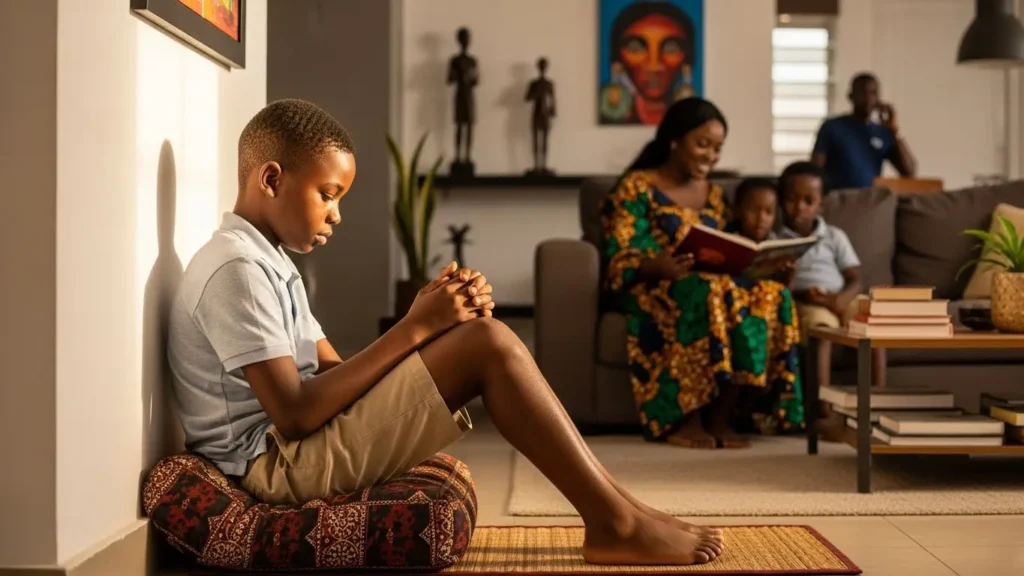
For years, the national conversation on child development has leaned heavily toward the girl child. The attention she receives is deserved and important. But quietly, almost without meaning to, society has allowed a different child to slip through the cracks — the boy child.
Not because he is unloved. Not because parents do not care.
But because the world has been conditioned to believe that boys are “naturally strong,” “emotionally tough,” and capable of carrying pressure without guidance.
This belief has cost us more than we admit.
The Silent Reality Boys Live In
Many boys grow up being told:
Don’t cry
Toughen up
Handle it
Be a man
These phrases may sound like motivation, but they reshape a child’s emotional foundation. A boy who is denied permission to feel is a boy who learns to suffer quietly.
What happens to a child who is corrected more than he is understood?
To a boy praised for silence but punished for softness?
To a young mind taught that vulnerability is shameful?
He becomes a man who:
- struggles to communicate
- reacts instead of expressing
- internalises stress
- believes he must fix everything alone
- carries pain he never learned to name
This is not a lack of strength.
This is the consequence of unmet emotional need.
The Emotional Burden Boys Carry
Across the world, research shows us something important:
Boys act out when they feel unseen.
Boys externalise emotional pain differently.
Boys often express sadness as anger or withdrawal.
Boys are taught solutions, not emotional language.
Boys become men who fear softness because it was never safe.
In Nigeria, the signs are everywhere — drug use, behavioural struggles, street survival, school dropout, correctional centre admissions, suppressed mental health, and emotional shutdown. These are not “problems.” They are signals.
Signals that the boy child is asking for help — quietly, but urgently.
When a boy cannot express his emotions safely, he expresses them in ways society eventually criticises.
Why Emotional Support Is Not Optional
When boys receive emotional guidance early, everything in their world becomes steadier:
Behaviour improves
Self-awareness grows
Communication becomes clearer
Decision-making becomes healthier
Academic performance rises
Confidence becomes grounded
Resilience increases
Emotionally supported boys grow into men who are:
calm
empathetic
responsible
able to apologise
able to listen
able to lead
able to love well
This is not only about raising boys.
It is about raising healthier husbands, fathers, mentors, leaders, and nation builders.
Why This Advocacy Matters Now
Behind many struggling men is a childhood where emotional support was missing.
We cannot keep raising boys on silence and expect emotionally whole adults.
We cannot demand maturity while denying them the tools for maturity.
We cannot keep telling boys to “man up” while their emotional world collapses quietly.
The boy child needs emotional support now — not someday.
What Emotional Support Looks Like
Emotional support is not indulgence.
It is not pampering.
It is guidance.
It looks like:
listening without judgement
allowing boys to name what they feel
teaching them emotional language
correcting with patience, not shame
modelling calm responses
giving them permission to pause
helping them try again after mistakes
showing them gentleness that does not weaken them
A supported boy becomes a man who does not break others because he is broken inside.
A Message to Parents, Schools, Mentors, and Society
The boy child is not asking for special treatment.
He is simply asking to be included in the emotional safety that every child deserves.
Supporting the boy child does not compete with supporting the girl child.
It complements it.
It strengthens families.
It strengthens communities.
It strengthens the future.
A society that truly values balance invests in both.
Elizabethan’s Commitment
At Elizabethan H&H Foundation, we believe that the emotional wellbeing of boys is a national priority. Through emotional literacy, school programmes, mentorship, mental health initiatives, and community outreach, we are restoring the emotional foundation of the boy child.
We do this because we know:
A boy who feels emotionally safe becomes a man who strengthens the world around him.
Closing Thought
The boy child is not asking for too much. He is simply asking to be seen, understood, and guided with the same intentionality given to his sister. When we give boys room to feel, room to grow, and room to begin again, we are not rescuing them — we are building the future.
And the future is watching.


Support the Boy Child
Supporting the Boy Child has a great role in changing the narrative in our society
Indeed! Kudos to Elizabethan H & H foundation for giving us the opportunity to change the narrative and redirecting us to focus on the boy child. As much as we focus on the girl child, we should also not neglect the boy child because, one day, the boy child will be a husband and a father. If the training isn’t right, the girl child that is now a wife and a mother will suffer it at the end.
Welldone!